The same information, twice
Journeys are planned in one program and invoiced in another. Every job is retyped by hand, and every retyping is a place where a number goes wrong.
The order, the route, the driver’s app, the waybill, the invoice and the payment are one chain. In Movira Logistics that chain runs to the end in one place, without anyone typing the same thing twice.
The app is live and working. We are looking for haulage firms whose daily work can shape where it grows next.
In most haulage firms the chain breaks twice: once between the driver and the office, and again between the office and the accountant. Both times the same information is typed in afresh.
Journeys are planned in one program and invoiced in another. Every job is retyped by hand, and every retyping is a place where a number goes wrong.
Where the load is and when it arrives. Each call interrupts someone’s work, even though the answer is already in the system.
A signed waybill rides around in the cab for a week. Until it lands, the invoice cannot go out — and some of them are lost for good.
The driver signs in with a phone number — there is no work email. The day opens as one screen, and everything done there reaches the dispatcher straight away.
Receiver name, a signature on the screen and photos. “Nothing arrived” and “the box was already damaged” are disputes a tick does not settle, but a signature and a photo do.
Marks made out in the forest are stored on the phone and sent when the network returns. The time stays the moment the driver actually tapped — not the moment the signal came back.
The driver marks arrival with one tap. The dispatcher sees the difference: still on the road, or standing at the gate for an hour already. Time spent at the stop is recorded on its own.
The address opens in whichever maps app the driver already uses, with their traffic, speed cameras and voice guidance. We do not build our own map.
The app is for iOS and Android. On a cab tablet it opens as two panes: the list on the left, the current stop on the right.
Every picture is taken from the working application. The data belongs to a demo account — no customer journeys are shown here.
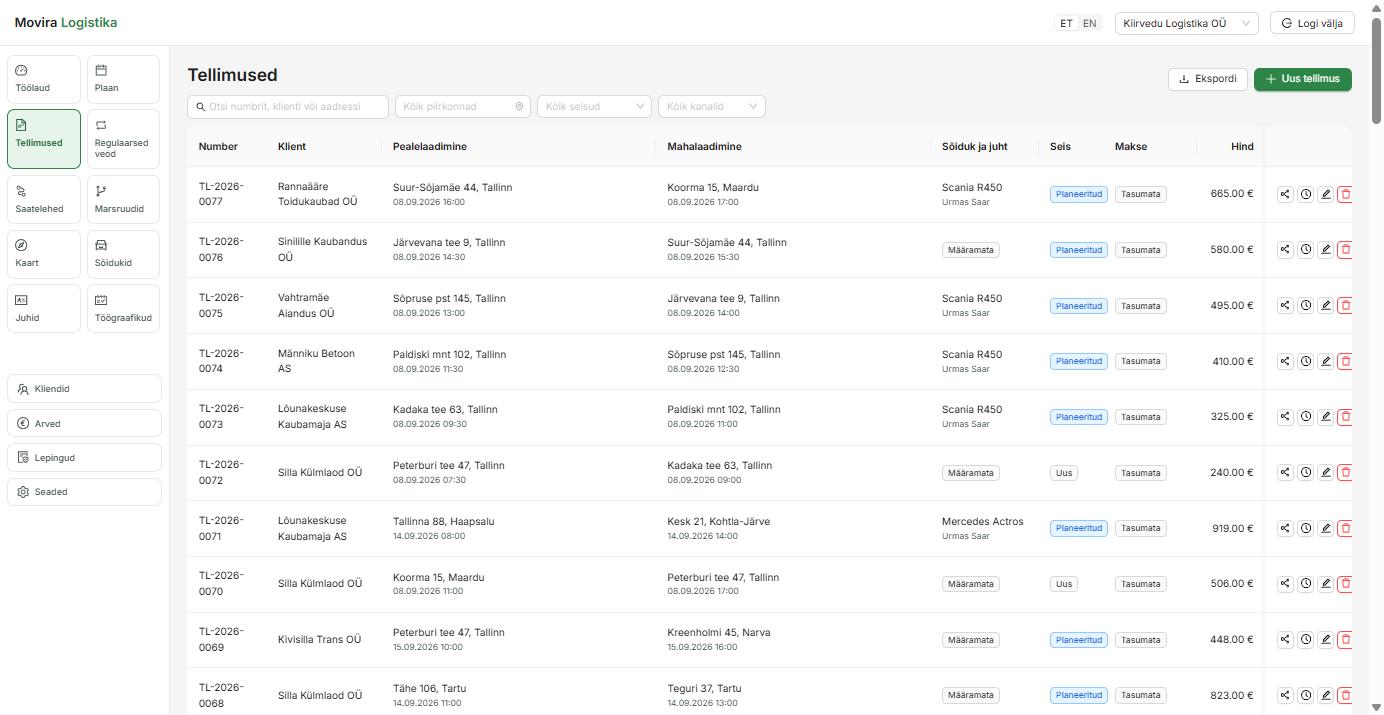
Number, client, both ends, vehicle and driver, region and status — on one row. Search and filter by region, status or channel. Payment status is visible at a glance, and a journey awaiting prepayment says so itself before anyone puts it to work.
Want to try it yourself? Write to us and we will set up an account.

A clipboard, a pen and a creased waybill in the glovebox — that is still how many firms run. A digital waybill is filled in at the same moment and the same place, but reaches the office before the driver has left for the next stop.
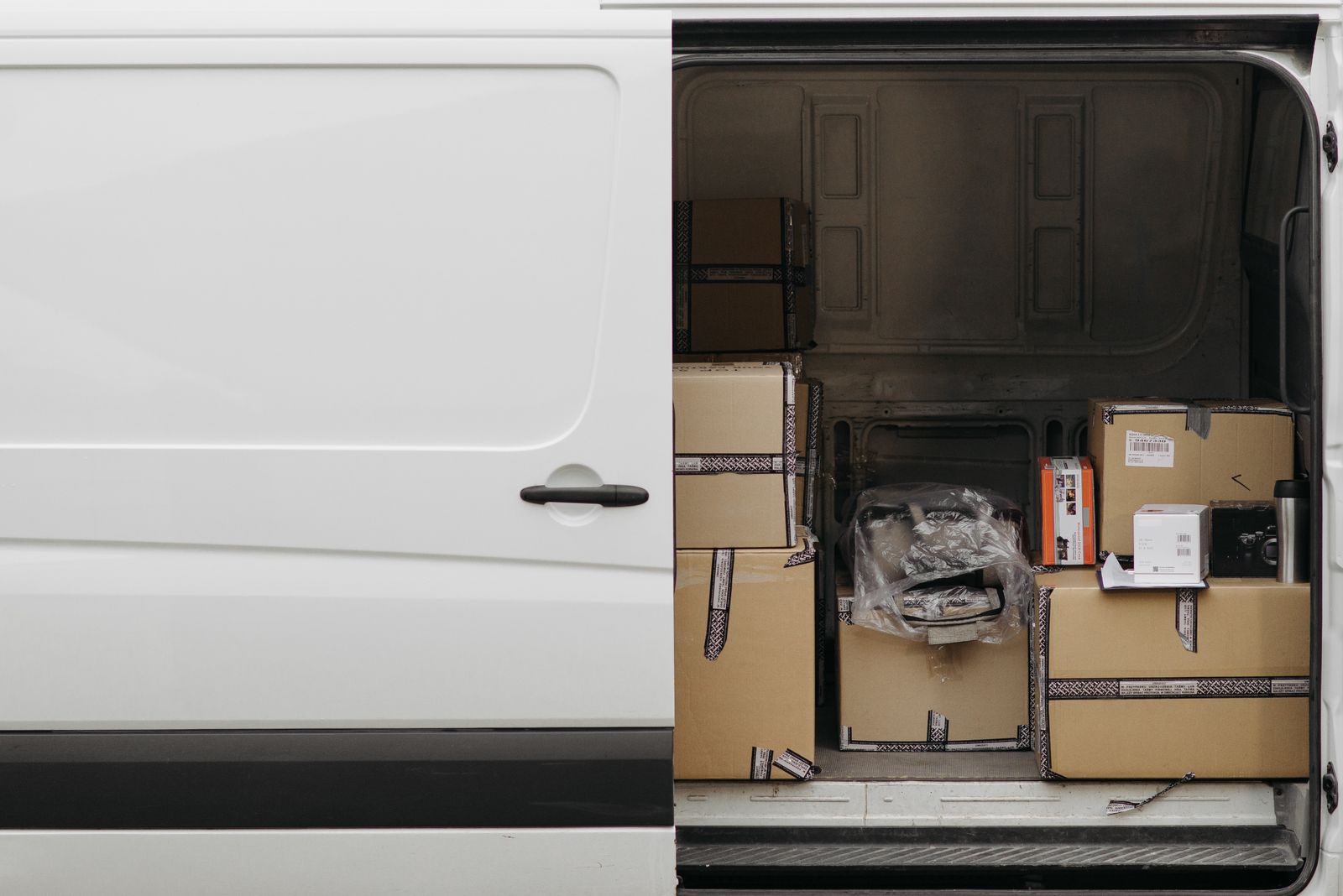
The job reaches the driver before they set off. Stops are in order, the waybill is filled in on the spot, and the office sees it straight away — not a week later when the paper finally leaves the cab.
Routes, vehicles and drivers sit in one view. A change no longer means a round of phone calls — the driver gets it immediately and the customer can follow the job themselves.
A completed journey carries everything the invoice needs: who, what for and at what price. The invoice goes to your accounting software and the payment is matched from the bank statement.
A waybill, a haulage contract or a hand-over note is signed with Smart-ID or Mobile-ID. Movira’s signing service is already part of the platform — logistics uses that. There is no add-on to buy or administer separately.
See the signing serviceEach part hands its data to the next, so nothing is entered twice and nothing stalls halfway.
From order to route, on a map and on a calendar. Changes can be handled as they happen rather than a day later.
The job lives on the phone. The app stores it locally and sends once the network returns — coverage on the road is not a given.
The waybill is filled in and signed on the spot. The office sees it immediately, not when the paper finally leaves the cab.
Customers place orders and follow them themselves. Fewer calls whose answer is already on screen.
Who drives, in what and when. Free capacity and clashes are visible at the same time.
A journey becomes an invoice and the invoice goes to your accounting software. Payments are matched from the bank statement.
Unplanned orders sit in one list, routed ones in another. You set the order of the stops yourself, and the driver takes it along as a run sheet.
Loading and unloading times are agreed in the system rather than over the phone. Less waiting at the ramp and less standing idle.
When your own truck is busy, hand the job to a partner without leaving the system. Subcontracted journeys stay in the same books as your own.
These connections already exist in Movira and run in the rental product every day. Logistics uses the same code, not a fresh attempt.
Working today
Logistics is not a separate product with separate passwords. It is one more app on the same foundation.
If you already use Movira for rentals or signing, there is no new account to create and no staff to enter a second time.
A client stays a client, whether they order a journey, sign a contract or pay an invoice.
Movira’s signing service is live today. Waybills and contracts are confirmed from there rather than from a new integration.
Downloads
Transport planning runs in a browser with nothing to install. The Windows version is for people who keep the plan open all day and want it on the taskbar, not inside a browser tab.
A real application: its own window, its own taskbar icon and an entry under "Apps & features".
The driver view is not in the Windows installer, and should not be: it is built for a phone and works out of coverage.
The installer is not code-signed yet, so Windows says "unknown publisher". Press "More info" and then "Run anyway". We say this up front: without a heads-up that message looks like malware, and reasonably so.
Installing it requires allowing installation from unknown sources on the phone. Since 30 September 2026 the APK is signed with the same key Google Play will use, so that a later store update lands on this very app. If you already have an earlier APK installed, uninstall it first: the key changed, and Android refuses an update signed with a different one — it just says the app was not installed. The app is not in the stores yet, and for iOS there is no such way either.
You can verify the file against the checksum list: SHA256SUMS.txt
Integrations
Everything the app does in the browser can also be done through the API. The documentation is public and always describes the version that is actually running.
The OpenAPI description opens in your browser: every endpoint with its fields, an example request and the response. The machine-readable form sits next to it at /api/docs-json, which most code generators can turn into a client for you.
Open the documentationYou create the key in the app, under account settings. The secret is shown ONCE — only a hash is stored, so a lost key cannot be read back afterwards by anyone, ourselves included.
Two forms, so the key also fits tools that consume the Bearer header themselves.
The Movira family
Transport is not the only place where a day gets stuck. Every Movira product runs on one login and knows the same customer.
Tell us how journeys come together today and where the time actually goes. We are building this now, and one real haulier’s answer shapes the product more than any market study.
We usually reply within one working day.